In Afghanistan, a healthcare emergency and a humanitarian crisis are, more often than not, the same thing. A woman who cannot safely deliver her baby because the nearest facility is four hours away across mountain terrain. A child under five whose malnutrition has progressed to the acute stage because there was no community health worker to catch it earlier. A community that has lost its clean water source and is now watching cholera spread.
These are not edge cases. They are the daily reality for millions of Afghans — particularly those in rural and remote districts, in conflict-affected areas, and in communities where women and girls face the greatest restrictions on their freedom of movement and access to services.
Reaching these communities is not a logistics problem. It is a relationships problem. And it is the problem that defines what separates ORCD from the majority of humanitarian actors working in Afghanistan.
Healthcare That Goes to the Community
ORCD delivers primary healthcare services across 27 provinces, with emergency health response capacity across all 34. The model is built around the community, not around fixed facilities that require people to travel to them.
Mobile health units travel to remote and conflict-affected communities, delivering maternal and child health services, routine vaccinations, nutrition screening, and basic treatment. For women in areas where gender restrictions make visiting a facility impossible, a team of female health workers arriving at the community is not just convenient — it is the only viable option.
ORCD’s health programme includes community-based management of acute malnutrition — identifying and treating children under five with severe acute malnutrition before it becomes fatal. It includes psychosocial support for communities dealing with the mental health consequences of decades of conflict. It includes WASH integration — because clean water prevents more deaths than medicine, and no health programme is complete without it.
Women’s Empowerment Under Severe Restriction
Since August 2021, Afghan women and girls have faced systematic exclusion from public life. Bans on secondary and higher education. Restrictions on employment, on public movement, on access to services. The situation for women in Afghanistan is among the most severe of any country in the world.
International organisations have largely retreated from women-focused programming, citing the difficulty of operating within these constraints. ORCD has not.
ORCD’s women-led teams have access that male-staffed or international teams do not. Women’s protection centres provide safe spaces for education, skills training, and psychosocial support. Home-based learning programmes reach girls who have been excluded from school. Cash assistance reaches women-headed households — among the most economically vulnerable families in Afghanistan.
Community engagement with male leaders — built on fourteen years of relationships — creates the conditions in which this work is permitted. That is not something a newly arrived organisation can replicate. It is the product of sustained presence and trust.
Emergency Response: Already There Before the Crisis
Afghanistan is among the world’s most disaster-prone countries. Earthquakes, floods, avalanches, drought, and displacement are recurring features of life for millions of Afghans. When disaster strikes, the speed of response determines who lives and who does not.
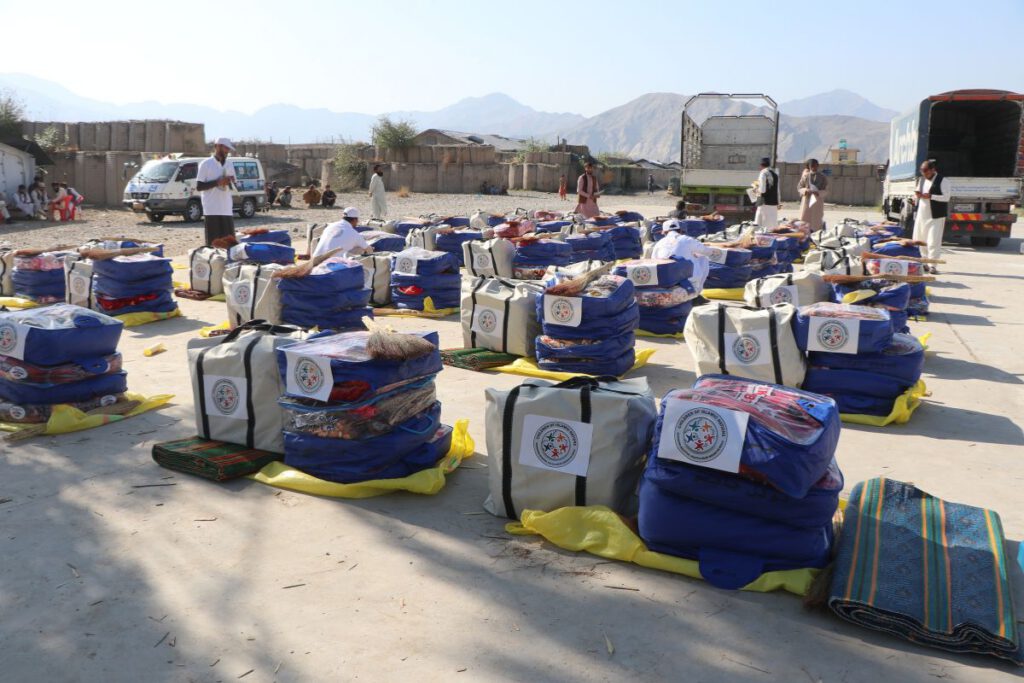
ORCD is pre-positioned across all 34 provinces. Its teams do not need to be deployed to a crisis — they are already in the community when it begins. Emergency food distributions, non-food item packages, temporary shelter, and emergency WASH response can begin within hours, not weeks.
In the language of the humanitarian sector, this is called “last-mile delivery” — reaching the people that other organisations cannot reach, in the places that are hardest to access, at the moments when delay costs lives. For ORCD, it is simply what it means to be Afghan-led and community-rooted.
“In a crisis, relationships matter more than resources,” ORCD’s operational teams say. “We don’t need weeks to establish ourselves. We’re already there.”